

Smart Waste Win
A smart waste bin, also known as a smart trash can or intelligent waste bin, is a technologically advanced waste receptacle that incorporates various sensors, connectivity, and automation features to improve waste management efficiency and sustainability. These bins leverage modern technology to optimize waste collection, enhance user experience, and contribute to environmental conservation. Here are some key features and benefits of smart waste bins.
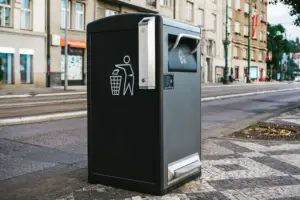
Features
Fill-Level Sensors
These sensors measure the fill level of the bin in real-time. They can use ultrasonic, infrared, or other technologies to accurately determine how full the bin is.
Connectivity
Smart waste bins are connected to the internet or a network, enabling remote monitoring and management.
Read More
Data Collection
The bins collect data about fill levels, usage patterns, and operational status, which can be used for optimization and analysis.
Read More
Compaction Technology
Some smart bins have built-in compactors that compress waste to maximize capacity.
Read More
Solar Power
Solar panels can power the smart bins, reducing the need for external electricity sources.
Read More
RFID or NFC Technology
Radio-frequency identification (RFID) or near-field communication (NFC) technology can enable user identification and track waste disposal behavior.
Read More
Benefits of Smart Waste Bins
Smart waste bins contribute to the concept of the “smart city,” where technology is used to improve urban living, sustainability, and efficiency. By leveraging data and connectivity, these bins transform traditional waste management practices into more intelligent and effective systems.
0
Projects
0
People
0
Years
0
Offices